Yoga and Coaching for Women with Endometriosis
Personalized, one-to-one support through gentle somatic yoga and reflective conversation.
Together, we make space to care for your body, explore what endometriosis has changed in your life, and practice responding to your needs with greater understanding and choice.
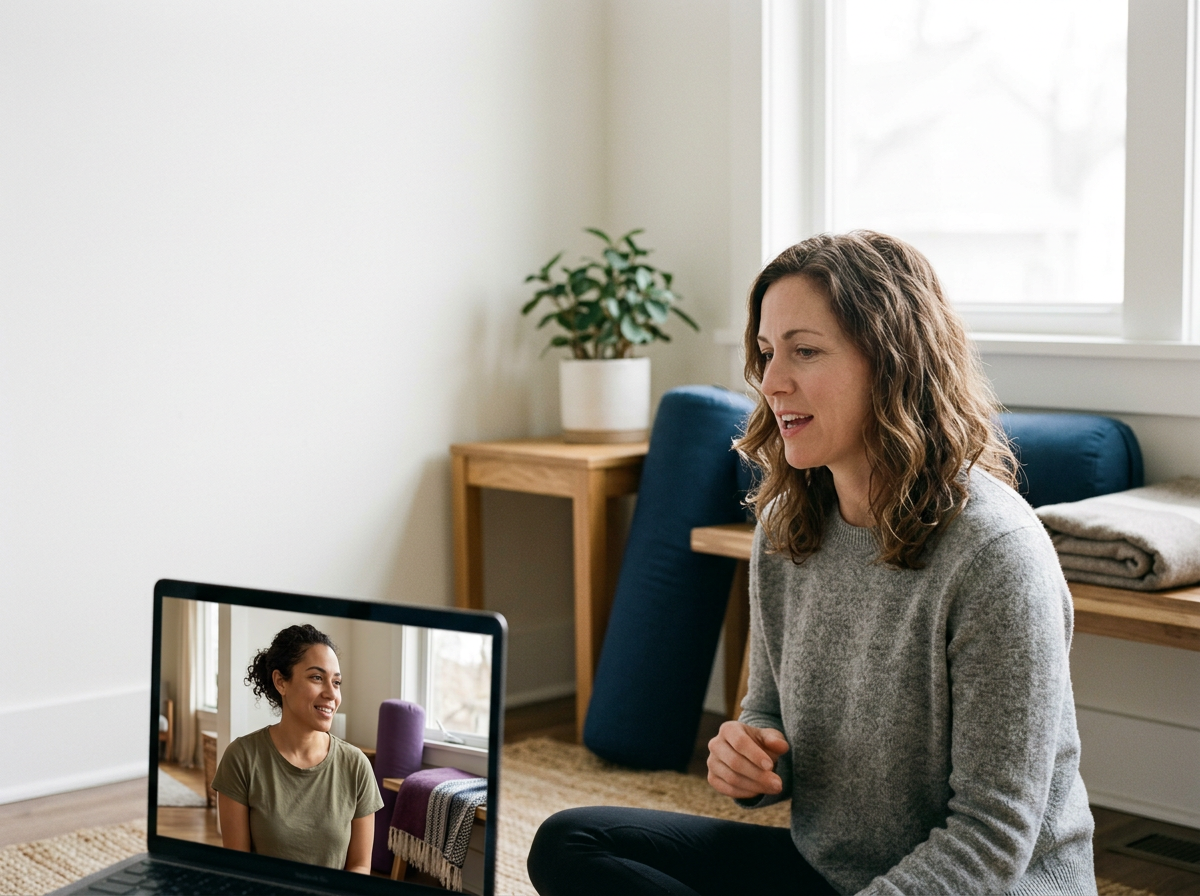
We begin with what matters to you.
Perhaps you want to feel more comfortable approaching movement, make time for rest, communicate what you need, or find a way to care for yourself that fits your life.
You may feel uncertain about your body or exhausted by everything you are managing.
Our work brings yoga and coaching together around your experience. We begin with how you are feeling, what you need support with, and what you would like to explore.
Practice listening to your body
Through gentle movement and pauses for rest, notice your comfort, preferences, and limits, and practice responding with care.
Make room for your experience
Explore the thoughts, feelings, expectations, and responsibilities that influence how you care for yourself and make decisions.
Find something you can carry forward
Choose a manageable practice or action, then use our time together to reflect on what helped and what needs adjusting.
What you might work toward
Your priorities will be personal to you. Together, we might explore:
• Becoming more comfortable with gentle movement and rest
• Developing a short yoga practice you can return to at home
• Recognizing your needs and responding with less self-criticism
• Communicating your needs and boundaries more clearly
• Making room for grief, fear, anger, or changing expectations
• Finding manageable ways to participate in your own care
We work at a pace that respects your body, circumstances, and capacity.
How this work can begin
One woman first reached out while recovering from surgery and navigating uncertainty about endometriosis and fertility. She later sought personalized yoga support, wanting to feel stronger and more flexible.
Our work brought movement and conversation together. Alongside the yoga practice, we explored her relationship with her body, her trust in herself, and what she believed might still be possible for her future.
A practical wish to care for her body became a starting point for exploring what mattered to her more broadly.
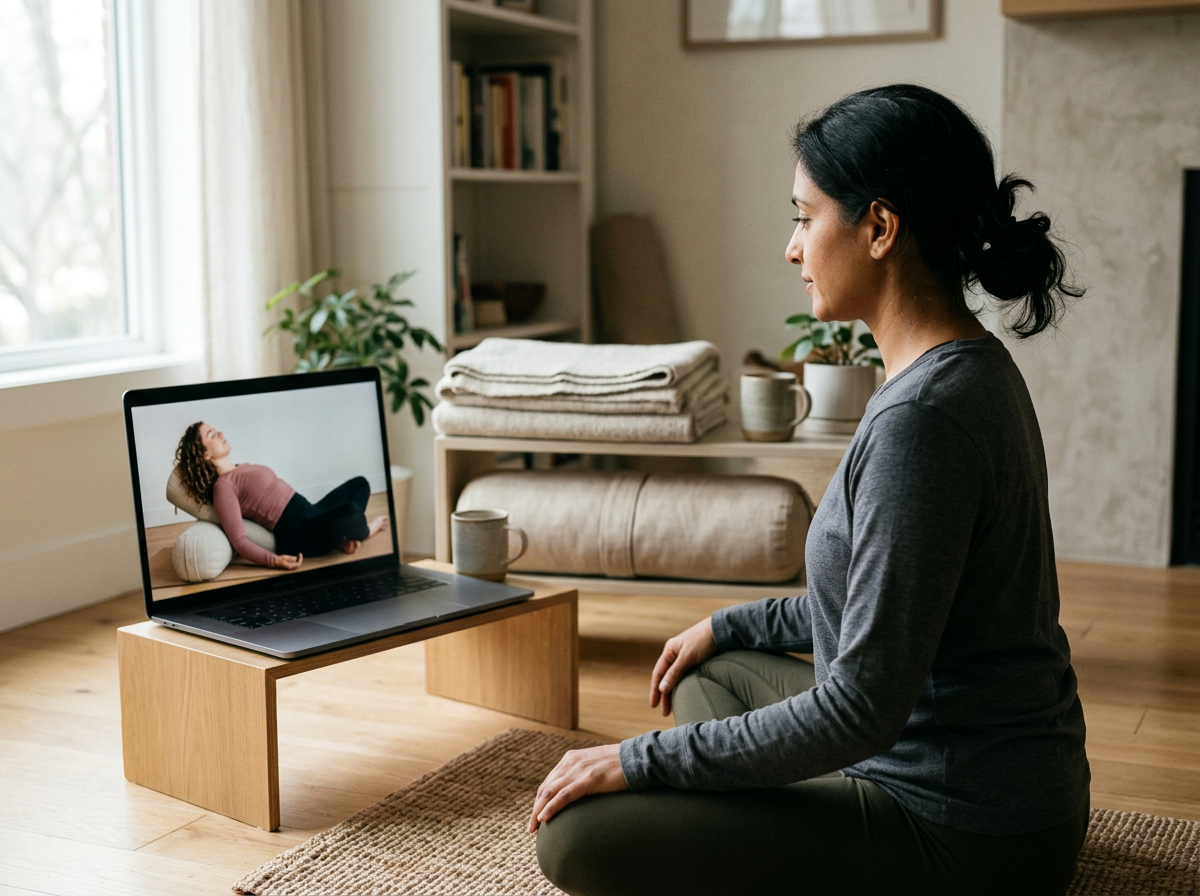
Gentle yoga and conversation, woven together.
The yoga I teach draws on SATYA, developed by Tias Little at Prajna Yoga. It is a gentle somatic practice, primarily done on the floor, using small, slow movements and pauses for rest and awareness.
Watch Tias Little introduce SATYA →
I guide you to notice how movement feels and adjust the practice around your comfort and capacity. You can begin without previous yoga experience.
Each 60-minute virtual session includes a brief check-in, a guided yoga practice, and a coaching conversation. A typical session includes around 20 minutes of yoga, followed by time to reflect and explore what matters to you.
Our conversation can draw on what you noticed during practice or focus on something you are navigating in daily life. We close by identifying one manageable practice or next step to carry forward.
Yoga and coaching are both central to the work. Their pacing and balance respond to your needs that day.
“I am always so impressed by Hoda’s nurturing nature: she takes great care to ask thoughtful questions, listen intently, and tailor her classes according to how my body feels.”
—Ariana K., yoga and coaching client
FAQs
How do I know whether Yoga & Coaching is right for me?
1
This offering may be a good fit if you are living with endometriosis and want support through both gentle yoga and reflective conversation.
You might want to develop a personal practice, explore your relationship with your body, communicate your needs, or find manageable ways to care for yourself.
You can begin without a clearly defined goal. The complimentary introductory call gives us a chance to consider whether this approach matches what you are looking for.
What happens during the introductory call?
2
We meet virtually for a complimentary 15-minute conversation.
You can briefly share what brings you here and ask your main questions. I’ll explain how yoga and coaching come together and we’ll consider whether working together feels like a fit.
There is no obligation to continue.
Do I need yoga experience or flexibility?
3
No previous yoga experience is needed. The practice uses gentle, slow movements, primarily on the floor, with time for rest.
We explore a comfortable range of movement for you. You are encouraged to speak up, adjust, or pause as needed.
What do I need for a virtual session?
4
A quiet space with room to lie down and move comfortably, a yoga mat or another suitable padded surface, and a device for our video call.
Blankets and pillows can provide support. Before our first session, we’ll discuss your space and any practical adjustments you may need.
Does this replace medical care or therapy?
5
Yoga and coaching offer support alongside medical and mental-health care. They do not diagnose or treat endometriosis or replace care from qualified health professionals.
Our work focuses on your experience, self-care, needs, and choices. Medical advice and treatment decisions belong with your qualified healthcare professionals.
Why work together over three months?
6
Working together over three months gives us time to personalize your practice, explore what matters to you, and revisit what you are learning between sessions.
We can notice what feels useful, adjust what does not fit, and develop practices you can continue using independently.

Begin with a conversation
A complimentary 15-minute virtual call gives us a chance to meet, answer your initial questions, and explore whether yoga and coaching would be a good fit for you.
There is no obligation to continue.
A place to begin on your own
Endometriosis and the Parts We Carry is a free printable reflection worksheet that invites you to notice some of the responses that may develop around pain, uncertainty, and the pressure to keep functioning.
Use it to begin recognizing these responses with greater curiosity and less judgment.